A G1000, a backup iPad, and a headset on your head is a different sunglass problem than a long airline leg. This page leads with Flying Eyes gradient gray, which the maker says is darker at the top and lighter toward the panel. Bayonet frames for an over-ear ANR headset on a long leg are on the airline sunglasses page.
By a working airline pilot · How we pick · Last reviewed Sep 28, 2026 (ET)
What changed: new category page for non-polarized GA sunglasses, led by a gradient gray.
Top picks
The short version — labels come from our full write-ups below.
Transmission figures are the makers’ published numbers. The lowest confirmed non-polarized price on this page is $239. American Optical’s non-polarized True-Color Gray starts at $250. Prices are what we saw on a live page on Sep 28, 2026.
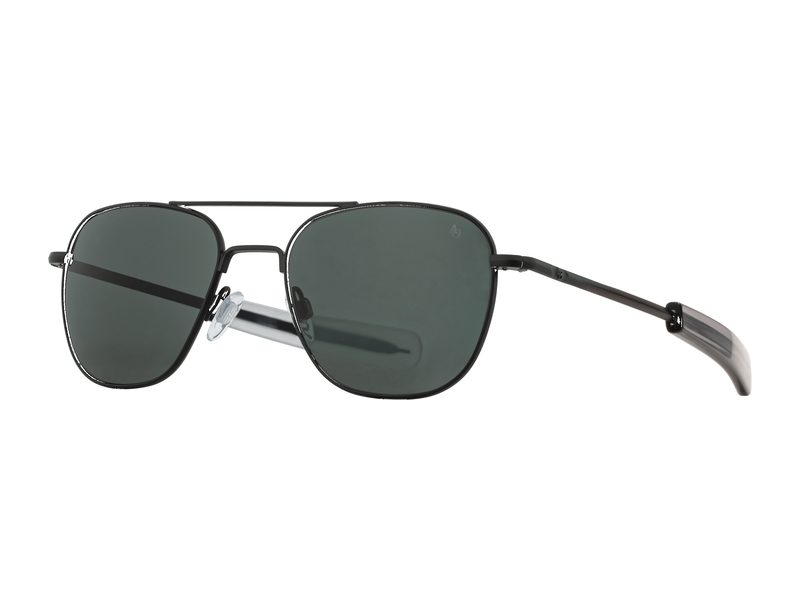
Kingfisher Sport Gradient Gray was $239 in Standard and Wide; Polarized Solid Gray on that product was $249. Original Pilot non-polarized True-Color Gray was $250 (SKU OP-155BTCLGYN) and $290 (SKU OP-155BTCLGYG), both marked in stock in the page data. The storefront range shown is $250–$345, which includes polarized lenses. Randolph non-polarized was $285; polarized was $345. None of the three pages publishes a frame weight. The American Optical photo is an Original Pilot on white; match the frame color to the SKU you select.
A gradient for the panel, and a bayonet that costs less
Polarized lenses pass light in one plane. On an LCD that can turn a display dark or black as the angle changes — the PFD, the MFD, or the iPad on your knee. The same filter can also cut glare reflecting off another aircraft. Flying Eyes advises against polarized lenses for pilots because they can interfere with PFDs, MFDs, and PDAs, and says polarized solid gray can interfere with panel screens and make other aircraft harder to see. American Optical’s FAQ says: “Often polarized lenses are not recommended as they can interfere with LCD control panels.” Randolph labels non-polarized American Gray as preferred by pilots or for use with HUDs. Treat that as general guidance, not a guarantee that every screen will black out, or that every non-polarized lens will be easy to read.
GA framing: Flying Eyes says a gradient is darker at the top and lighter toward the panel, kneeboard, and iPad, while still blocking sun through the windshield. On Pilots of America, a student pilot said a gray Randolph pair they had bought as non-polarized was hard to read on a G1000 and on lap charts. Another pilot wrote, “Gradient sunglasses solve 90% of the problems.” Others in that thread said to tilt your head: if the screen goes black, the lenses are acting like a polarizer. That thread does not prove the student’s pair was polarized. It is why the lead here is the gradient, and the solid 18% Randolph is the comparison pair. Long-leg bayonet framing, plus Scheyden, is on the airline sunglasses page.
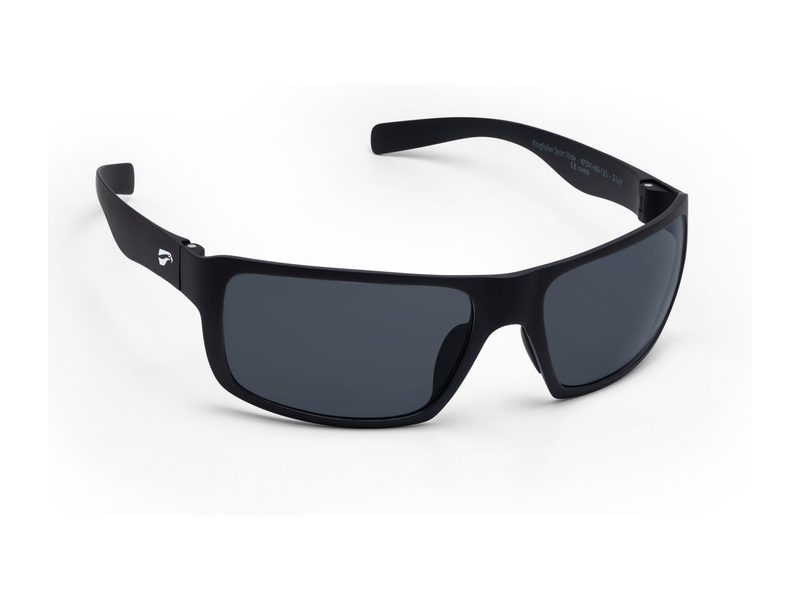
Lens: Impact-resistant polycarbonate, UV400. Choose Gradient Gray. Polarized Solid Gray is a different tint on the same frame.
Tint / VLT: 15.20% overall, 8.43% at the top, from Flying Eyes’ lens guide. The guide says the gray gradient is darker at the top and lighter toward the panel. Dark Solid Gray on the same guide is 11.41% VLT, which is the tint on the airline page.
Temples: Millimeter-thin seamless temples. Flying Eyes describes the frames as comfortable under headsets and helmets. Gradient Gray Matte Black is SKU KFSR-MB-GGT (Standard) and KFSW-MB-GGT (Wide).
Weight: Not published on the product page
Price: ~$239. That is the lowest non-polarized price confirmed on this page. Polarized Solid Gray is $249.
The only gradient in the set: 8.43% VLT at the top and 15.20% overall, against a single 18% figure on the Randolph
$239, which is $11 under the Original Pilot’s $250 non-polarized True-Color Gray and $46 under the Randolph’s $285
Thin temples for a headset, against bayonet temples on the Original Pilot and the Randolph
15.20% overall still passes less light than the Randolph’s 18%, and the top of the lens is darker still at 8.43%
Polarized Solid Gray is on the same product at $249
Weight is unpublished
Choose Gradient Gray when the hard part is reading the panel and the iPad while the windshield is bright. Vs Randolph: a two-number tint (15.20% / 8.43%) against one 18% number, thin temples against a bayonet, $239 against $285. The solid dark gray in this frame (VLT 11.41%, also $239) is the airline-page tint.
Lens: Set Polarized to No. True-Color Gray is the gray named on the product. The lens-type control offers AOLite nylon and SkyMaster glass. VLT is not published. The photo on this card is an Original Pilot on white; confirm the frame color against the SKU.
Temples: Bayonet. American Optical says they “slide easily under helmets or headgear.” Sizes S 52-20-140 mm, M 55-20-140 mm, L 57-20-140 mm.
Weight: Not published on the product page
Price: ~$250–$290 for non-polarized True-Color Gray in the page data we opened. Example: Gold, True-Color Gray, Polarized No, $250, SKU OP-155BTCLGYN, marked in stock. The same description at $290 is SKU OP-155BTCLGYG, also marked in stock. The price shown at the top of the page is $250–$345, and that range includes polarized lenses.
A bayonet at $250, which is $35 under the Randolph non-polarized price of $285
American Optical’s own FAQ tells pilots that polarized lenses often interfere with LCD panels
Temple length is 140 mm in all three listed sizes, against Randolph’s 150 mm XL
$250 is still $11 above the Kingfisher Sport at $239, and $290 is $5 above the Randolph
No published VLT, so the gray cannot be compared with 15.20% or 18% by a number
The $250–$345 storefront range includes polarized. Set Polarized to No.
Choose the Original Pilot when you want bayonet temples and the $250 non-polarized True-Color Gray. Vs Randolph: $250 against $285 for a non-polarized gray bayonet, with no published transmission on the AO page against 18% on the Randolph. Vs Kingfisher: a bayonet against thin temples, and no gradient number against 15.20% / 8.43%.
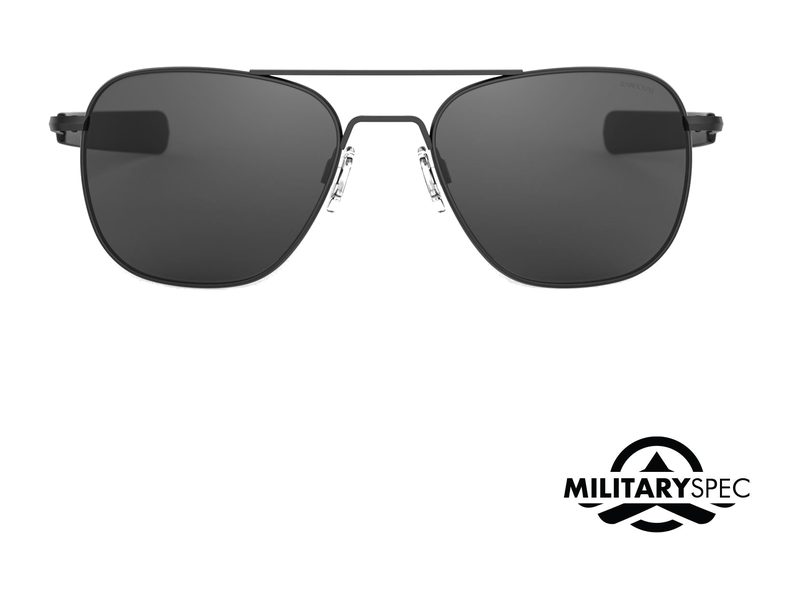
Lens: SkyTec glass, American Gray. Randolph: “Non-Polarized - Preferred by pilots or for use with HUDs.” UVA/UVB protection.
Tint / transmission: 18% light transmission on the non-polarized lens. That is one number for the whole lens, against the Kingfisher gradient’s 15.20% overall and 8.43% at the top.
Temples: Bayonet, “specially designed for comfort under headgear.” 140 mm on 52, 55, and 58 mm lenses; 150 mm on the 61 mm XL.
Weight: Not published
Price: ~$285 non-polarized in every size. Polarized on the same page is $345. On this page the Randolph is the solid-gray comparison, not the lead. It is the lead on the airline sunglasses page, where the job is a long leg under over-ear ANR.
A single published transmission, 18%, which is higher than the gradient’s overall 15.20% and much higher than the gradient’s 8.43% top
Glass, against polycarbonate on the Kingfisher. The Original Pilot offers nylon or glass depending on the lens type you select.
Bayonet temples in four lens sizes, including a 61 mm XL the Original Pilot’s size list does not show (AO stops at 57 mm)
$285, $46 above the gradient and $35 above the $250 Original Pilot
An even 18% tint is the style a Pilots of America poster said was hard to read on a G1000 and on lap charts
Polarized is $345 on the same page
Choose the Randolph here when you want the 18% glass number and a bayonet, and you have already decided a gradient is the wrong tint for you. Vs Kingfisher Gradient Gray: 18% against 15.20% / 8.43%, $285 against $239. Confirm Non-Polarized American Gray on the product page. The photo is the matte black frame.
Brand pages for lens type, transmission, temple style, and price, opened the same day. The gradient lead follows Flying Eyes’ own description of that tint and a Pilots of America thread in which pilots discuss solid gray on a glass cockpit. Polarized-lens notes are general guidance from the makers, not a guarantee. We did not wear these frames.
Flying Eyes: Kingfisher Sport, Gradient Gray $239, Polarized Solid Gray $249. VLT figures and the polarized-lens warning: product support.
American Optical: Original Pilot. Non-polarized True-Color Gray at $250 (OP-155BTCLGYN) and $290 (OP-155BTCLGYG). FAQ line on LCD panels is on that site.
Serengeti is the gradient brand in that forum thread. The US product pages did not load, so there is no Serengeti card and no price. Scheyden’s lower-priced frames were left off because the variant lists did not separate polarized and non-polarized lenses. More on our method: About & how we pick.